Coffee in five years: arabica up 46%, ground coffee about double
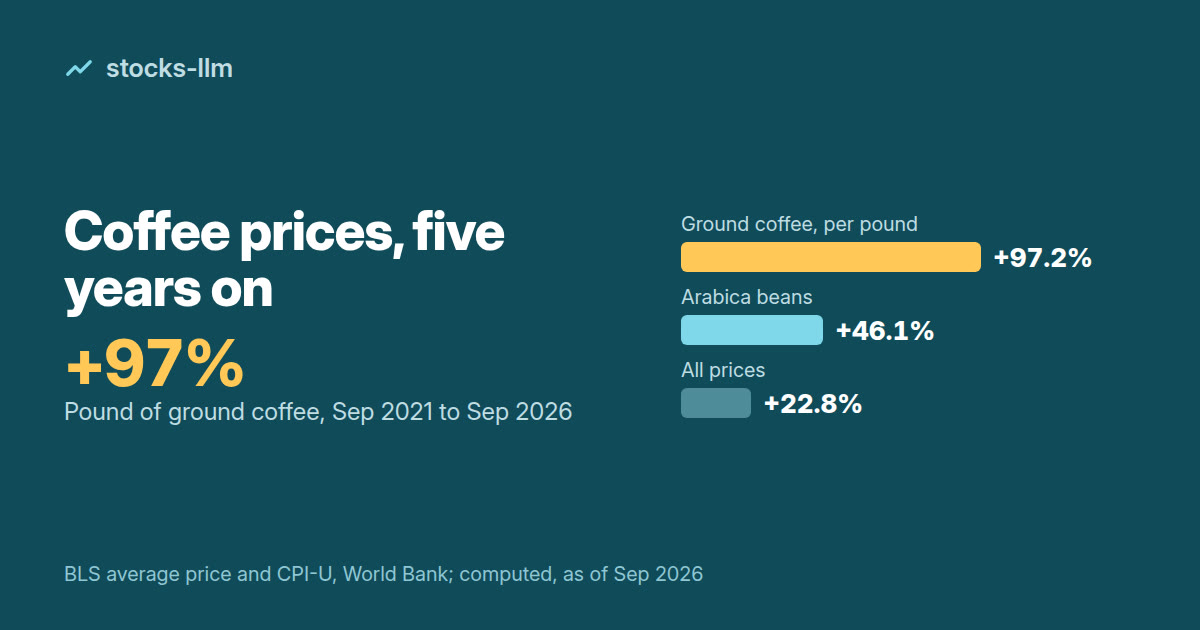
From September 2021 to September 2026, the average price of a pound of ground coffee in US stores went from $4.73 to $9.33, up 97 percent, or about double. Arabica beans on world markets rose 46 percent over the same five years, while prices overall rose 23 percent.
Coffee is priced at several stages on its way to a cup. The World Bank tracks the bean through the International Coffee Organization's arabica indicator, a monthly average price in US dollars per kilo. Further along, the US Bureau of Labor Statistics collects the average price of a pound of 100% ground roast coffee across US cities. The two measure different products in different units, so they are compared here by percent change over the same months, never on one scale.
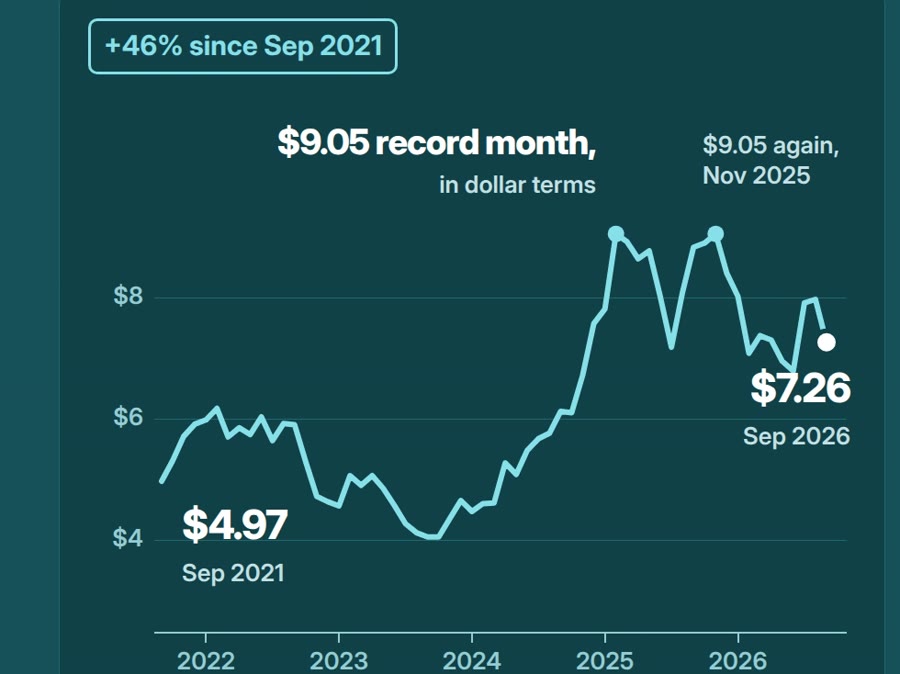
Arabica averaged $4.97 a kilo in September 2021. In February 2025 it reached $9.05, a record month in dollar terms, and the World Bank file shows the same $9.05 again in November 2025. The World Bank pointed to the lingering effects of the 2021 to 2022 production shortfall and steady demand growth. In July 2026 it said stronger global supply prospects and the removal of US tariffs helped prices ease. By September 2026 arabica was $7.26 a kilo, still 46 percent above September 2021, computed from the two monthly averages.
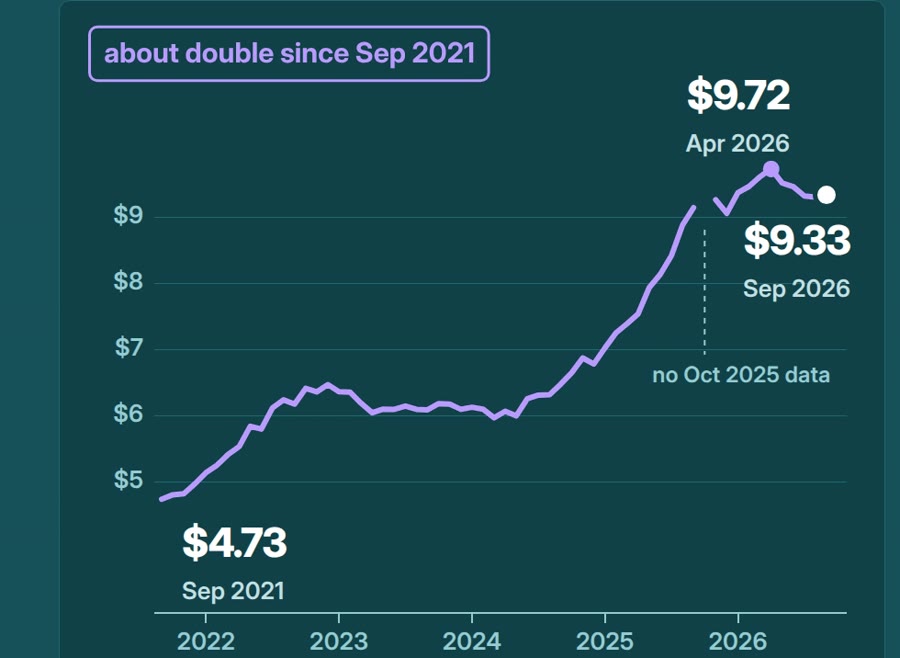
On the store shelf, a pound of ground coffee cost $4.73 in September 2021. It kept rising after the beans' record months, to $9.72 in April 2026, the highest month of the period, and stood at $9.33 in September 2026. That is 97.2 percent above September 2021, computed from the two months, or about double. BLS published no October 2025 value because of the 2025 lapse in appropriations, so that month is a gap in the series, not an estimate.
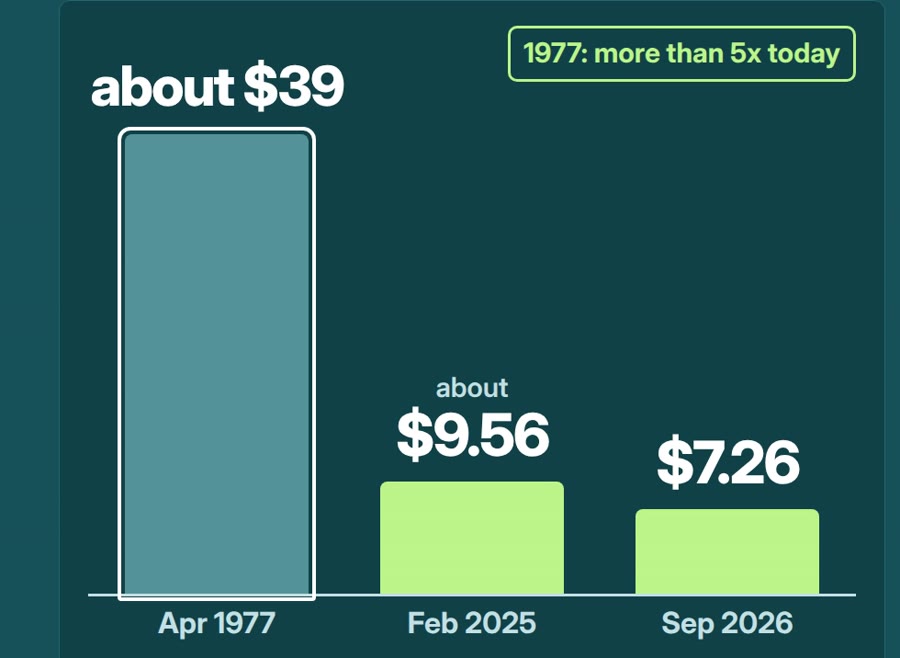
Two shortcuts are easy to take. The first is that coffee has never been this expensive. That holds only in dollar terms. Adjusted to September 2026 dollars with the BLS CPI-U, arabica's April 1977 month comes to about $39 a kilo, against about $9.56 for February 2025 and $7.26 today, so the 1977 level was 5.4 times today's price (computed). The second is that coffee prices doubled. Only the pound of ground coffee about doubled; arabica rose 46 percent over the same five years.
The cup at a café has no official price series at all. The closest official gauge is the BLS consumer price index for limited service meals and snacks, which covers counter-service restaurants in general, not coffee shops alone. That index rose 26 percent from September 2021 to September 2026, a little more than the 23 percent rise in the CPI-U for all items over the same months.
As of September 2026, the latest month in both sources, arabica sits about 20 percent below its $9.05 record months in dollar terms (computed), while the pound of ground coffee, at $9.33, is just below its April 2026 high of $9.72. These are monthly averages, and recent World Bank months can be revised as new data arrive.
The figures show that each stage of the chain moves on its own path. The world price of arabica is one input to a pound of roasted coffee, and over these five years the shelf price rose further, and stayed high later, than the bean's price did, a gap the checked sources do not explain.
Watch the short video: YouTube
Sources
- World Bank Commodity Price Data (Pink Sheet), monthly, October 2026
- World Bank Data Blog, Beverage prices soften but risks are brewing, May 20, 2025
- World Bank Data Blog, Beverage prices retreat as supplies recover, July 7, 2026
- BLS average price, coffee, 100% ground roast, per lb, US city average
- BLS CPI-U, all items, US city average
- BLS CPI-U, limited service meals and snacks, US city average