Foursquare's rise and fall: a reported $650M, then $0 for shareholders
Foursquare, the check-in app, was valued at a reported $650 million in 2013, and when the ad tech firm Infillion agreed to buy it in September 2026, its shareholders got $0, according to co-founder Dennis Crowley. The sale price was not disclosed, so that $0 describes what equity holders received, not what Infillion paid.
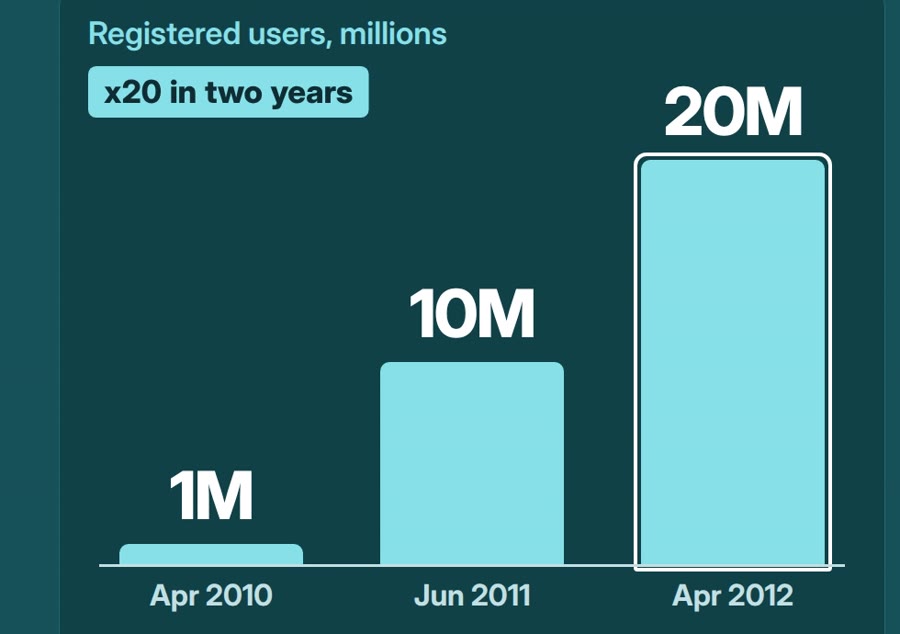
Foursquare launched in 2009 as a phone app for checking in at bars, cafes and other places, and the most frequent visitor of a venue became its mayor. The idea spread quickly. Registered accounts passed 1 million in April 2010, 10 million by June 2011 and 20 million by April 2012, a twentyfold rise in two years, based on company milestones reported by TechCrunch and VentureBeat. These are registered accounts, not active users, so they measure how many people signed up rather than how many used the app on a given day.
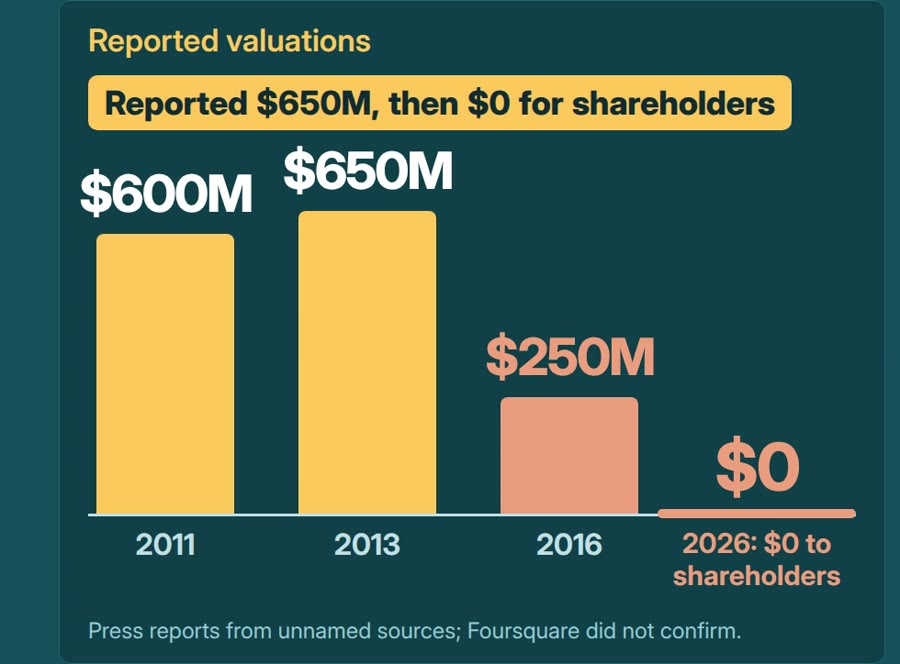
Investors followed the growth. TechCrunch reported a $600 million post-money valuation for the 2011 round, citing unnamed sources, and later a reported $650 million valuation for the 2013 round. In 2016 a new round cut the reported value to about $250 million, per Re/code, less than half the 2013 figure, and Crowley stepped down as CEO. Over the years the company raised an estimated $400 million, according to TechCrunch in 2024. Foursquare never confirmed these valuations. Each one is a press report of the price set in a single funding round, not a market price that changes every day.
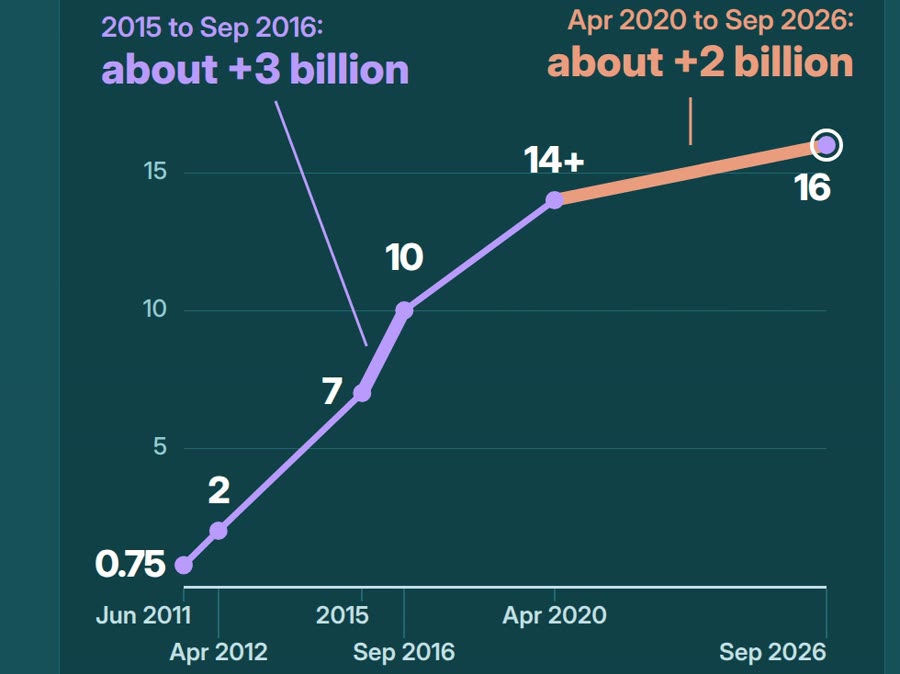
Check-ins tell the usage story. Foursquare reported running totals at intervals: 0.75 billion in June 2011, 2 billion in April 2012, 7 billion in 2015, more than 10 billion in September 2016, more than 14 billion in April 2020, and 16 billion in September 2026, the last figure from Infillion's announcement. Because the totals are cumulative, the pace comes from the gaps between them. Users added about 3 billion check-ins in about a year, from 2015 to September 2016, and about 2 billion in the six years after April 2020. Both gains are computed from rounded company figures, so they are approximate.
Two readings of this story go further than the record allows. A cumulative count can only grow, so the check-in total never went down; what slowed was the rate at which new ones were added. And the $0 is not a sale price, since the deal terms were not disclosed. The slower check-in pace and the $0 shareholder outcome are two facts that sit side by side in the record, not a documented cause and effect. Meanwhile the company had changed course, leaning into location data and reporting more than $100 million in revenue in 2019, according to TechCrunch.
The last chapter came in steps. In May 2024 Foursquare laid off 105 employees, about 25% of its staff, as reported by TechCrunch. The original City Guide app was shut on December 15, 2024, so the company could focus on Swarm. On September 18, 2026, Infillion announced that it agreed to buy Foursquare, which continues as a brand under Infillion. On October 20, 2026, Crowley wrote that the outcome was $0 for preferred and $0 for common shareholders.
A funding-round valuation is the price investors agree on for a slice of a company at one moment, based on what they expect it to become. It is not cash in shareholders' hands, and in a sale equity holders receive only what the final deal delivers to them, which is how a reported $650 million and a $0 outcome can describe the same company years apart.
Watch the short video: YouTube
Sources
- Dennis Crowley, Some final words on Foursquare, October 20, 2026
- Infillion to acquire Foursquare, press release, September 18, 2026
- AdExchanger, Infillion acquires Foursquare, September 18, 2026
- TechCrunch, Foursquare passes one million users, April 22, 2010
- TechCrunch, Foursquare at 10 million users, June 20, 2011
- TechCrunch, Foursquare closes $50M at a $600M valuation, June 24, 2011
- VentureBeat, Foursquare at 20 million users, April 16, 2012
- Fortune, Foursquare funding and valuation, December 22, 2015
- TechCrunch, Foursquare gets $45M and a new CEO, January 14, 2016
- VentureBeat, Foursquare users pass 10 billion check-ins, September 13, 2016
- TechCrunch, Foursquare merges with Factual, April 6, 2020
- TechCrunch, Foursquare lays off 105 employees, May 23, 2024
- Foursquare, City Guide sunset