Amazon Q3 2026: best operating margin ever, so why did shares drop?
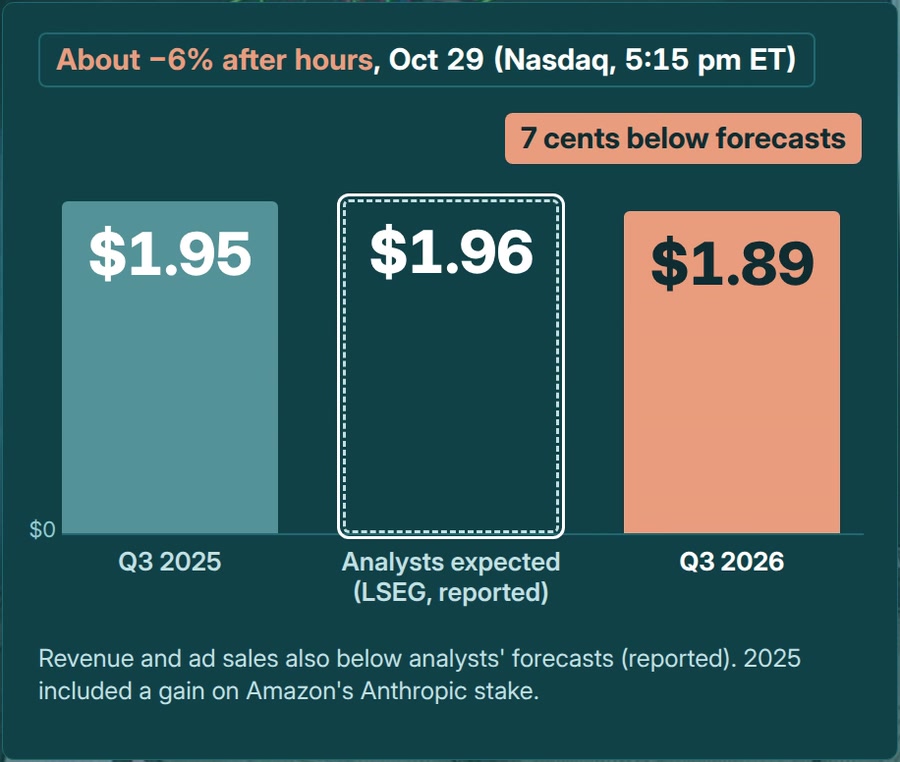
Amazon's shares fell about 6% in after-hours trading on October 29, 2026, even though its third quarter brought an operating margin of 13.9%, the highest Amazon has ever reported. CNBC tied the drop to results below Wall Street's expectations: earnings per share of $1.89 came in 7 cents below the $1.96 analysts expected, according to LSEG data reported by CNBC.
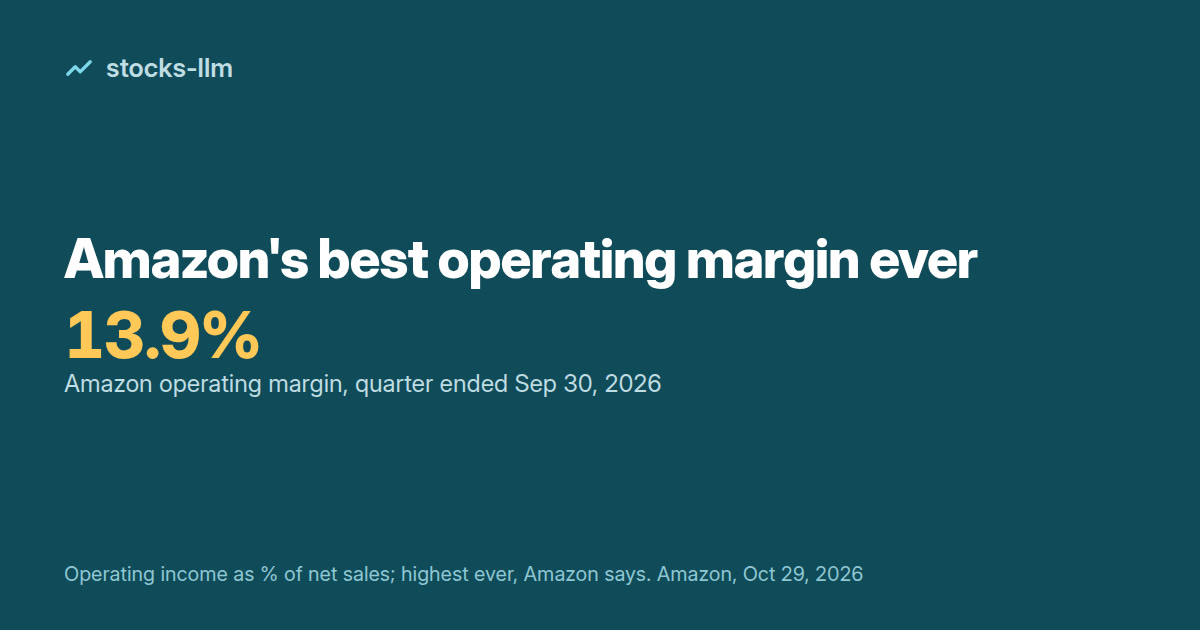
The figures come from Amazon's earnings release for the quarter ended September 30, 2026, published after the market close on October 29. Operating margin is operating income as a share of net sales, so it shows how much of each sales dollar is left after the costs of running the business, before interest, taxes and gains on investments. Over the last six quarters it went from 11.4% in the second quarter of 2025 and 9.7% a year earlier to 11.7%, 13.1% and 13.7%, and then to 13.9% this quarter. Amazon calls it its highest operating margin ever, and SEC quarterly data since 2008 shows no higher quarter.
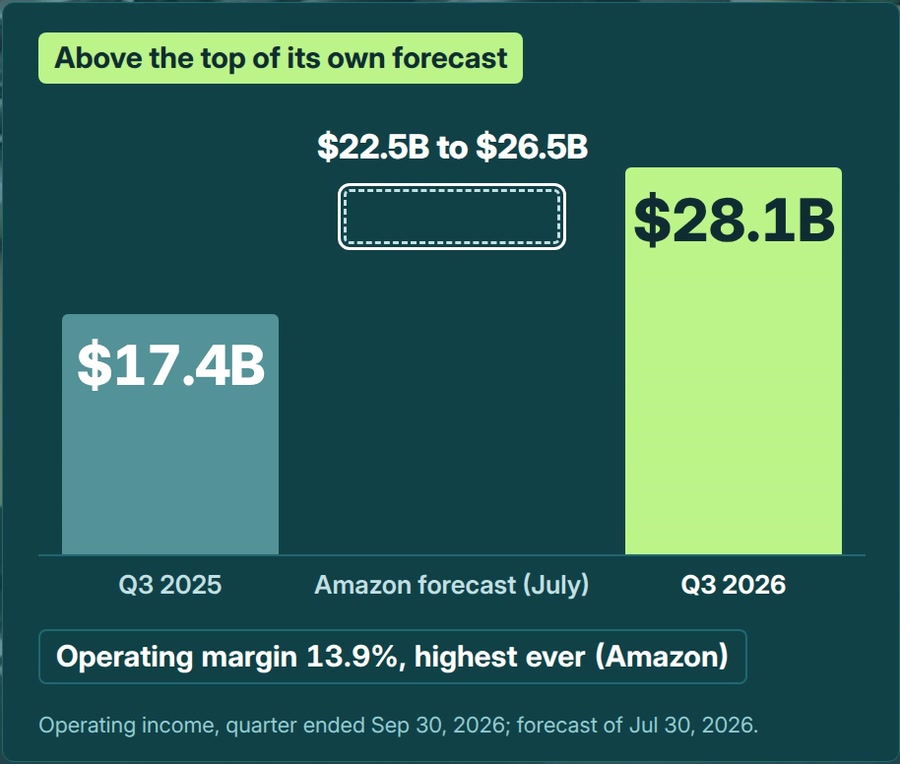
Net sales rose 12% from a year earlier, from $180.2 billion to $201.9 billion. Amazon says growth would have been about 4 points higher without Prime Day moving into the second quarter for most large countries. Operating income reached $28.1 billion, up from $17.4 billion a year earlier. The useful comparison here is Amazon's own forecast: in July it guided to operating income of $22.5 billion to $26.5 billion, and the result landed above the top of that range.
The fastest-growing segment was AWS, Amazon's cloud business. Its sales grew 39% in a year, from $33.0 billion to $46.0 billion, which Amazon describes as its fastest growth in nearly five years. North America sales grew 6% and International 5%. Advertising sales rose about 11%, from $17.7 billion to $19.6 billion, in Amazon's own table.
The other side of the report is the comparison with analysts. Earnings per share were $1.89, against $1.96 expected according to LSEG, as reported by CNBC. Revenue and ad sales also came in below analysts' forecasts, CNBC reported. Earnings per share were also lower than the $1.95 of a year earlier, which Amazon says included gains on its investments in Anthropic. A common misreading is that the quarter fell short of Amazon's own forecast. It did not: the quarter beat Amazon's guidance and fell short of analysts' estimates, two different yardsticks that point in opposite directions here. Another is that advertising shrank; Amazon's figures show it grew.
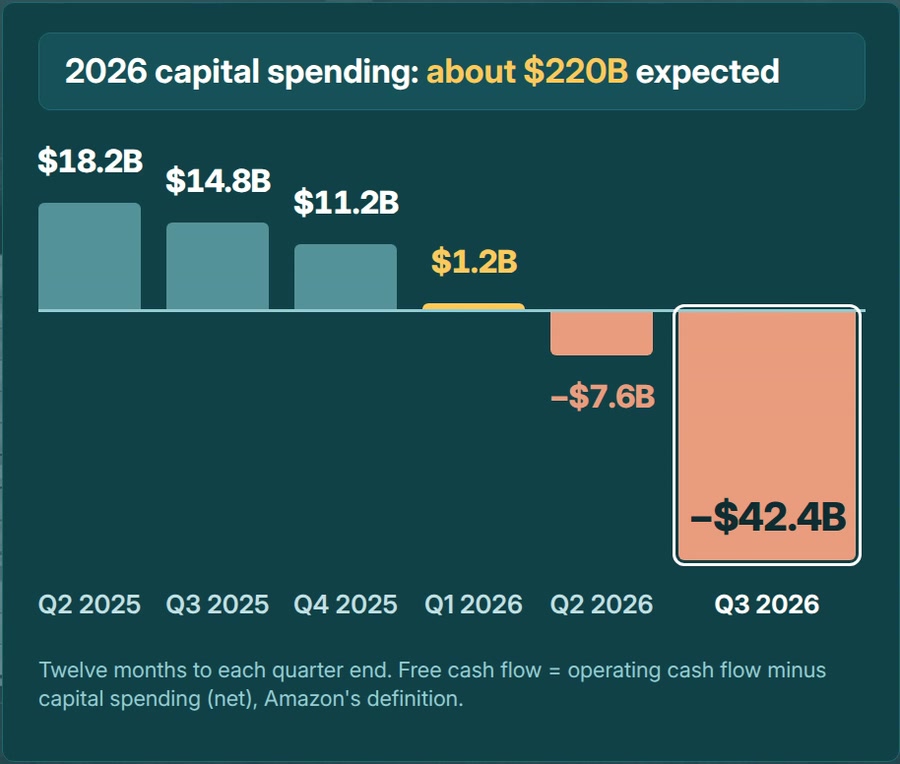
Cash is the third part of the picture. Free cash flow, Amazon's measure of operating cash flow minus purchases of property and equipment net of proceeds and incentives, was minus $42.4 billion over the last twelve months, against plus $14.8 billion a year earlier. Amazon says the rise in spending over that period primarily reflects investments in artificial intelligence, and it still expects 2026 cash capital expenditures of about $220 billion. No source cited here names negative free cash flow as the cause of the share move; it is a fact of the report, not the stated reason.
As of October 29, 2026, the after-hours price was $229.28 at 5:15 pm ET, against a 4:00 pm close of $243.79, according to Nasdaq. That is a single after-hours reading, taken shortly after the release.
A share price reacts to results compared with what was expected, not to results alone. The highest operating margin Amazon has reported and a beat on the company's own forecast can still sit next to a falling price when earnings come in below analysts' estimates.
Watch the short video: YouTube