How Netflix makes money now: ads are about 5 cents per dollar
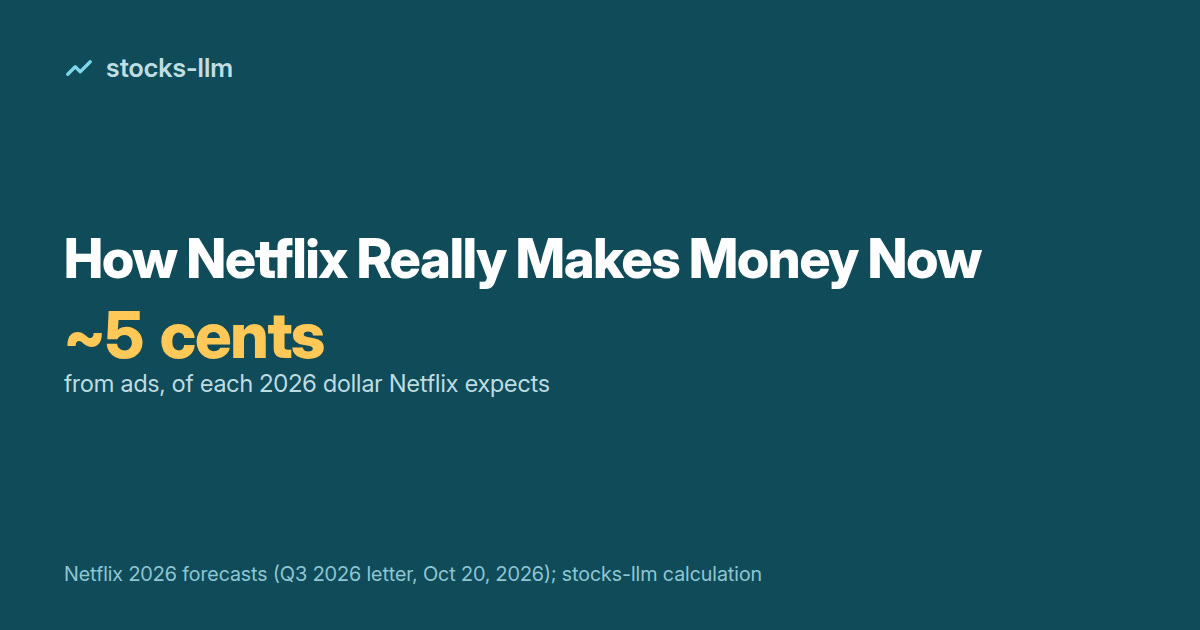
Netflix still makes its money almost entirely from the monthly bill. Of every dollar of revenue Netflix expects for 2026, ads bring in only about 5 cents, a stocks-llm calculation from two company forecasts in its Q3 2026 shareholder letter of October 20, 2026: about $2.7 billion of ad revenue out of $51.1 billion in total revenue.
In April 2022, Netflix told investors that sharing was holding back its growth. It had just lost subscribers for the quarter, and it estimated that more than 100 million extra households were watching on shared accounts. Three changes followed: a cheaper plan with ads in November 2022, a crackdown on sharing in May 2023, and further price rises.
The crackdown is what Netflix calls paid sharing, launched in more than 100 countries in May 2023, the United States included. Netflix said in July 2023 that the cancel reaction was low. Paid memberships at the end of each year, from its shareholder letters, went from 230.75 million in 2022 to 301.63 million in 2024, more than 70 million added in two years. Netflix stopped reporting the count every quarter in 2025, and in January 2026 it said it had passed 325 million.
Prices rose too. Netflix raised US prices in January 2025, and reports say it raised them again in March 2026. As of November 2026, its US Help Center lists the Standard plan without ads at $19.99 a month and Standard with ads at $8.99, up from $6.99 when the ads plan launched. In October, Netflix said members took this year's price changes much like earlier ones, and as it expected. Prices also differ widely by region: in Q4 2024, the last time Netflix published the figure, average monthly revenue per membership was $17.26 in the US and Canada and $7.34 in Asia-Pacific. The US and Canada brought in about 44% of 2025 revenue, the biggest of four regions, computed from the Form 10-K.
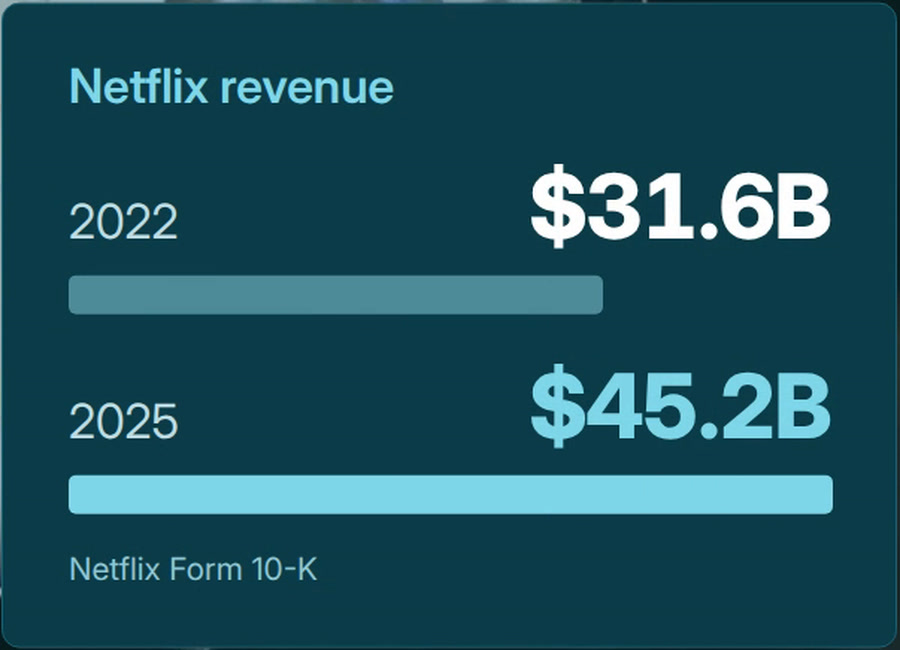
All three changes show up in the top line. Revenue, as reported in the Form 10-K, rose from $31.6 billion in 2022 to $45.2 billion in 2025. In that report, Netflix credits 2025's growth to more members, higher prices and more advertising.
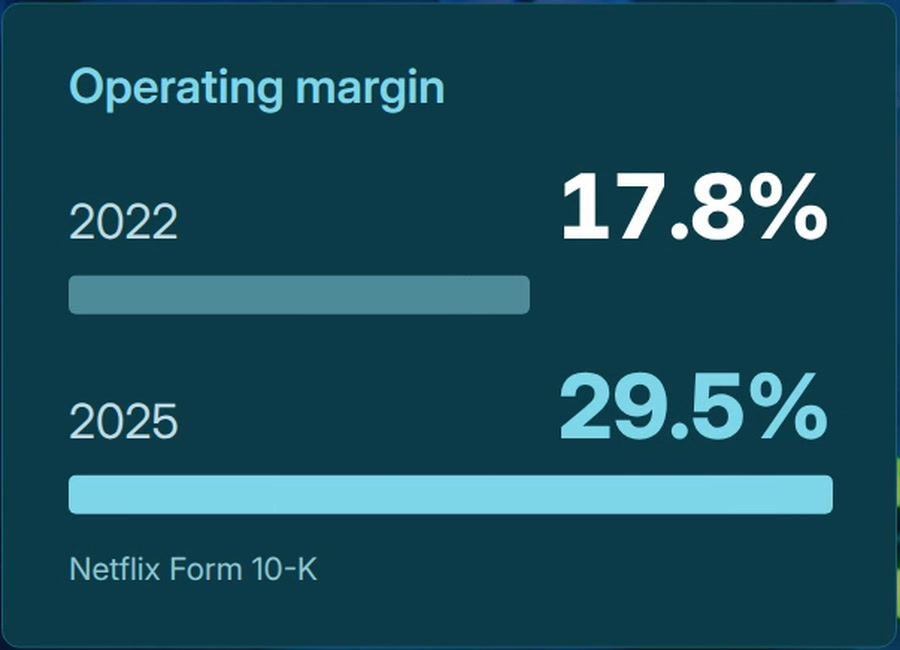
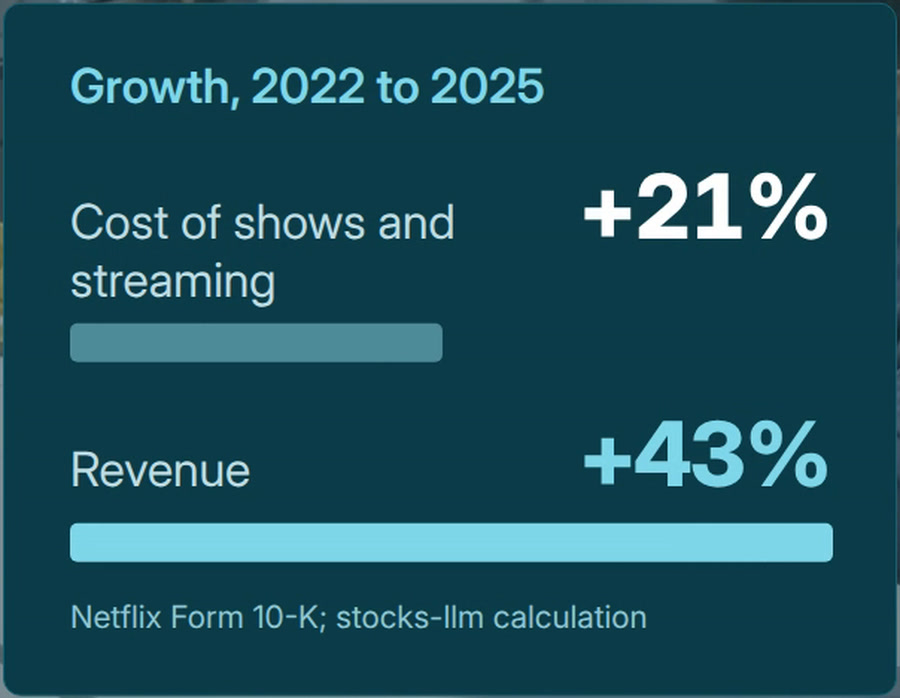
Where the money goes is computed from the same 10-K. Out of every $10 Netflix took in during 2025, about $5.15 paid for shows, films and streaming them, about $1.90 went to marketing, technology and admin, and about $2.95 was left as operating profit. That operating margin was 29.5% in 2025, up from 17.8% in 2022. Over the same three years, revenue grew about 43% while the cost of shows and streaming grew about 21%.
The ads plan is the change viewers see on screen, so it is easy to read it as the new engine. It did catch on. In Q4 2024, more than 55% of sign-ups in Netflix's ad countries chose it, and in May 2026 Netflix told advertisers that the plan reaches more than 250 million monthly active viewers, a count of viewers, not accounts. Ad revenue more than doubled in 2025, to over $1.5 billion, more than 2.5 times the 2024 level. Yet for 2026 Netflix expects about $2.7 billion, cut in October from about $3 billion, and next to the whole business that is still small.
As of November 2026, the newest member count is the 325 million floor from January 2026, and the newest revenue per membership by region is from Q4 2024. The 2026 ad and revenue figures are Netflix forecasts dated October 20, 2026, not reported results.
The mechanism runs through the monthly bill: paid sharing turned borrowers into paying members, price rises made each membership worth more, and the ads plan opened a cheaper door. Membership fees still bring in about 95 cents of every dollar Netflix expects.
Watch the video: YouTube
Sources
- Netflix Form 10-K for 2025
- Netflix Q3 2026 shareholder letter
- Netflix Q4 2025 shareholder letter
- Netflix Q4 2024 shareholder letter
- Netflix Q4 2023 shareholder letter
- Netflix Q2 2023 shareholder letter
- Netflix Q3 2022 shareholder letter
- Netflix Q1 2022 shareholder letter
- Netflix Upfront 2026
- Netflix Help Center, US plans and pricing
- CBS News on the March 2026 US price change