How Much Tether Makes Per Employee Compared With Three Big US Banks
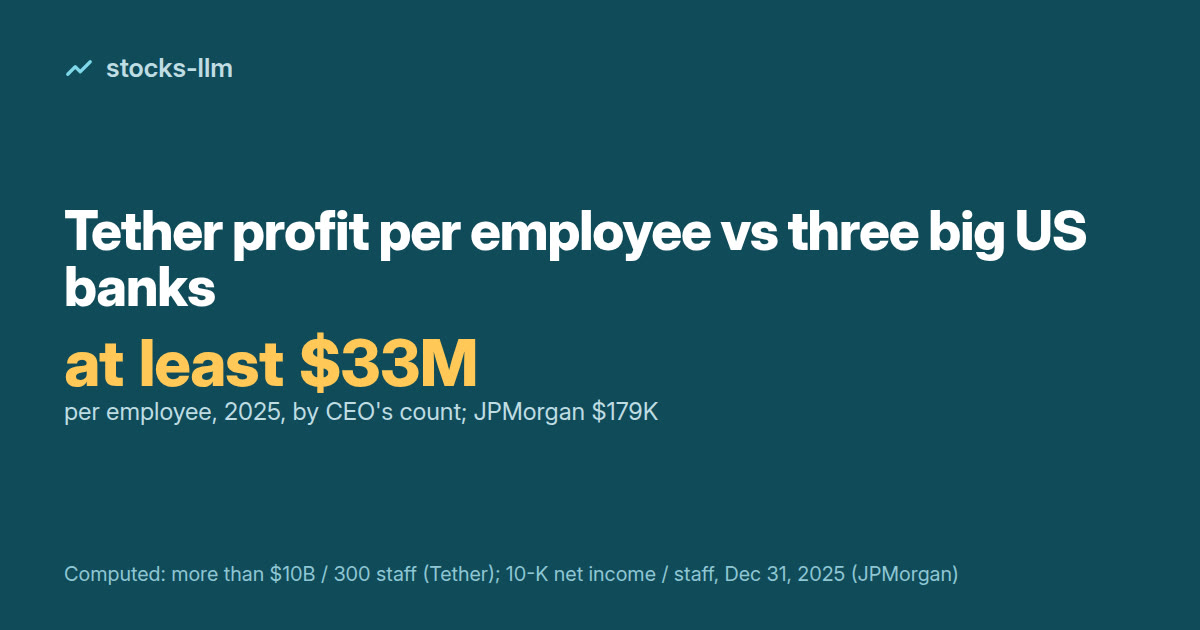
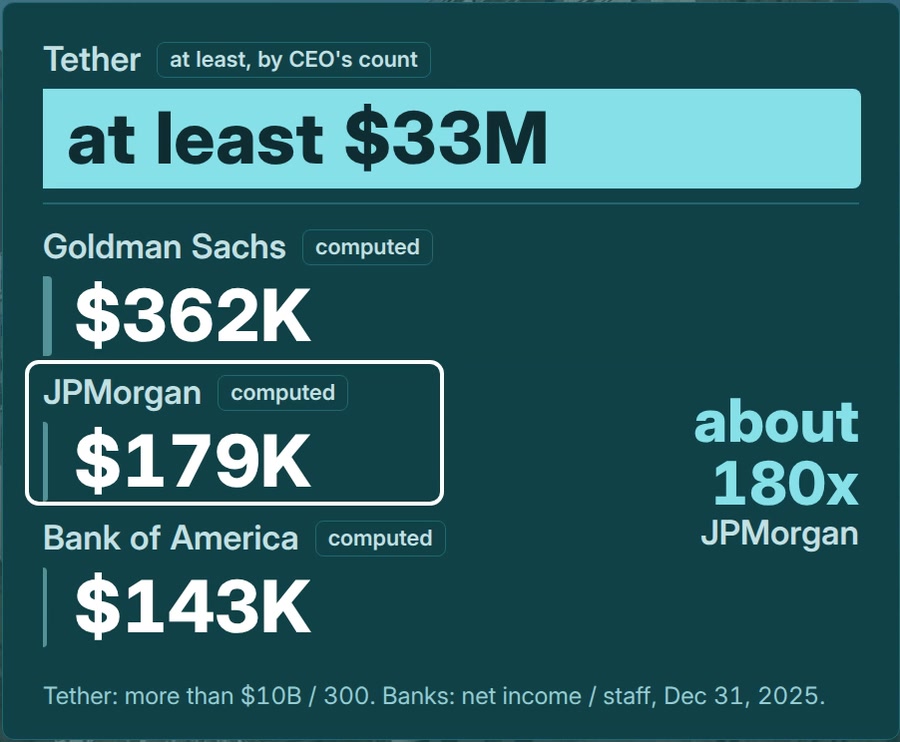
Tether, the company behind the USDT stablecoin, made at least about $33 million in profit per employee in 2025, using its CEO's headcount. That is about 180 times the roughly $179,000 per employee that JPMorgan Chase made in the same year.
Tether issues USDT, a digital token meant to always be worth one dollar. Buyers pay Tether dollars for the tokens, and Tether holds that money in reserves. As of December 31, 2025, more than $186 billion of USDT was in circulation, according to Tether's fourth quarter 2025 attestation release. The company's business is what it earns on the money it holds while those tokens stay in use.
The per employee figure is computed from two inputs. Tether reported net profit of more than $10 billion for 2025 in its attestation release of January 30, 2026. Its CEO, Paolo Ardoino, said on the When Shift Happens podcast in October 2025 that the company had between 250 and 300 people. Dividing more than $10 billion by the upper count, 300, gives at least about $33 million. For the banks, 2025 net income from each 10-K is divided by staff at December 31, 2025: Goldman Sachs made about $362,000 per employee, JPMorgan about $179,000 and Bank of America about $143,000. On that basis, Tether's figure is about 92 times Goldman Sachs and about 233 times Bank of America.
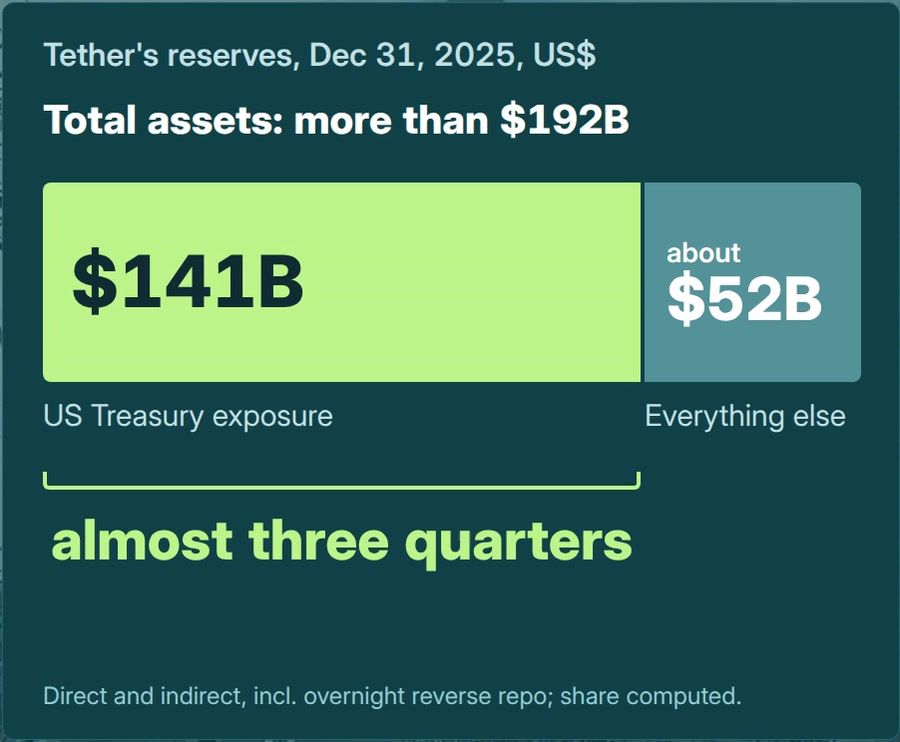
Most of the money sits in US government debt. As of December 31, 2025, Tether reported total assets of more than $192.9 billion and US Treasury exposure, direct and indirect including overnight reverse repurchase agreements, of more than $141 billion. That is almost three quarters of everything it holds. Direct Treasury holdings were more than $122 billion; the rest is indirect exposure, including overnight reverse repo.
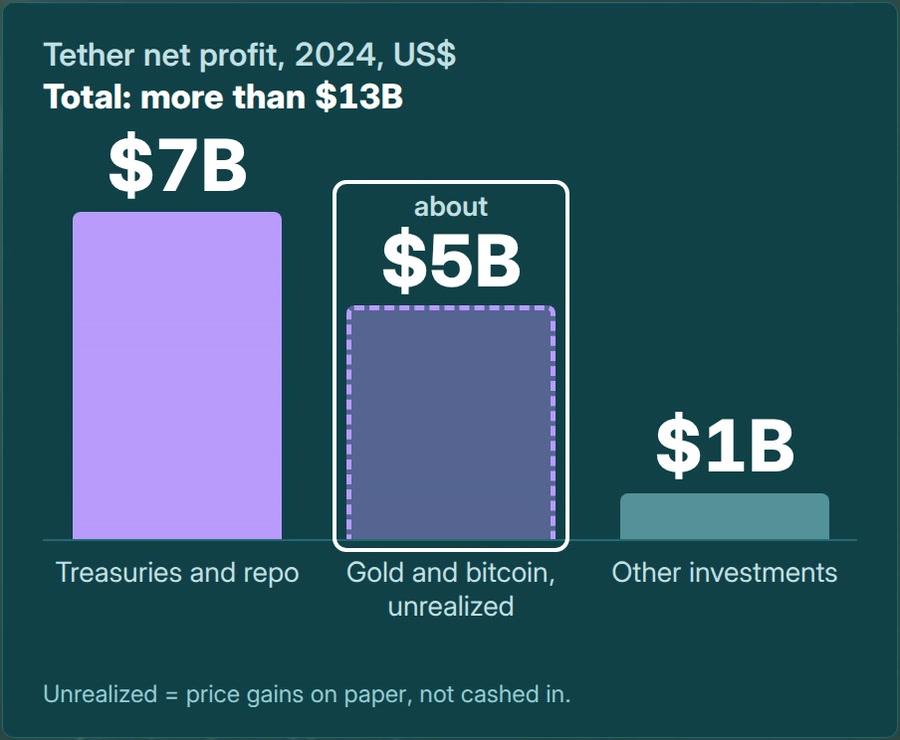
A common reading is that Tether's profit is simply interest on Treasuries. The only split Tether has published is for 2024, when it reported more than $13 billion in net profit. Treasuries and repo agreements brought $7 billion of it, the biggest part. About $5 billion came from unrealized gains on gold and bitcoin, meaning price gains on paper that were not cashed in, and other investments added $1 billion. Tether published no such split for 2025, so the share of interest in that year's profit is not known.
The comparison also mixes two kinds of figures. Tether's profits come from attestation releases prepared with the accounting firm BDO, which give a narrower form of assurance than a full financial statement review, and they include unrealized gains. The banks' figures are GAAP net income from their annual 10-K filings. Tether also files no headcount, so its side of the ratio rests on a spoken estimate, and using 250 people instead of 300 would make the per employee figure larger, not smaller.
Today the checked picture is this: more than $10 billion of reported profit for 2025, more than $13 billion for 2024, both stated as minimums with the words "more than", a reserve base of more than $192.9 billion led by Treasury exposure, and a team its CEO put at 250 to 300 people. The bank figures come from annual filings for the same calendar year.
The gap comes from the model rather than from any single number. A stablecoin issuer holds a large pool of customer dollars in interest bearing government debt and needs few people to run it, while a bank spreads its earnings across hundreds of thousands of employees serving many lines of business.
Watch the short video: YouTube